-

-
 Argentina (en)
-
Australia (en)
-
 Belgien (de)
-
Belgique (fr)
-
België (en)
-
 Brasil (en)
-
 Canada (en)
-
Canada (fr)
-
 Česko (en)
-
 Chile (en)
-
 Danmark (en)
-
 Deutschland (de)
-
 España (en)
-
 France (fr)
-
 Hrvatska (en)
-
 Ireland (en)
-
 Italia (en)
-
 Magyarország (en)
-
 Nederland (en)
-
 Norge (en)
-
 Österreich (de)
-
 Polska (pl)
-
 Portugal (en)
-
 România (en)
-
 Schweiz (de)
-
 Slovenija (en)
-
 Slovensko (en)
-
 South Africa (en)
-
 Srbija (en)
-
Suisse (fr)
-
 Suomi (en)
-
 Sverige (en)
-
Svizzera (en)
-
 United Kingdom (en)
-
 United States (en)
-
 Россия (en)
-
 Україна (en)
-
 日本 (en)
-

[Crops 101] How To Sow & Harvest Sugarcane
![[Crops 101] How To Sow & Harvest Sugarcane](/cms/uploads/news_6a9eda0941412.jpg)
Welcome to your next "Crops 101" lesson of the Farming Simulator Academy! Today, we’re looking at sugarcane. We’ll show you what makes it special, which machines you need, and how to plant, harvest, and sell it. Let’s get started!
What Is Special About Sugarcane?
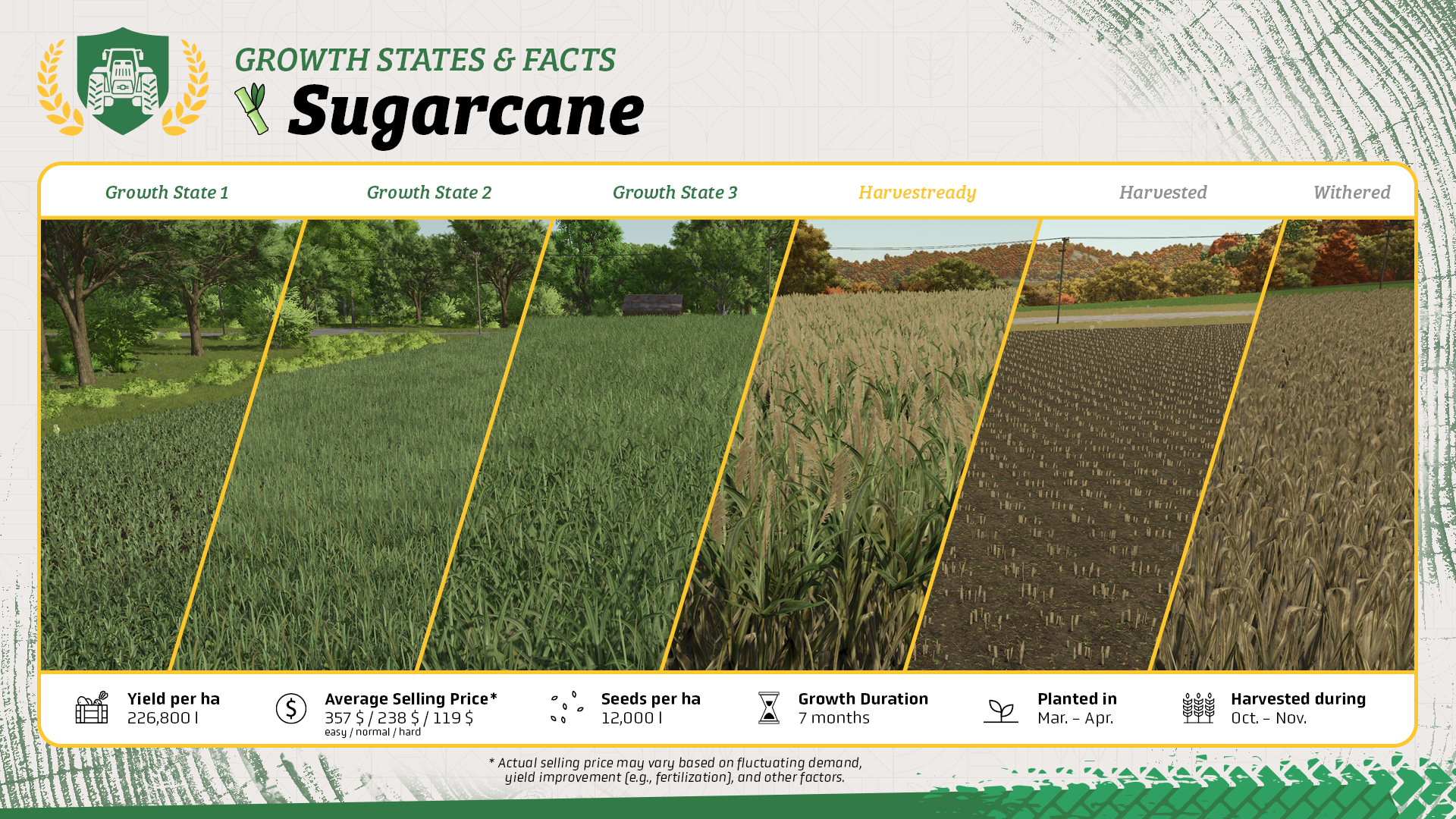
- Sugarcane grows back after harvest, so you don’t need to replant it every time.
- It produces a high yield, but its selling price is comparatively low.
- You can refill your planter with harvested sugarcane.
- You usually don’t need to cultivate the field between harvests, but periodic plowing is required after several harvests to avoid a yield penalty.
- Sugarcane harvesters have a narrow working width, so harvesting takes more time.
What You Need For Sugarcane
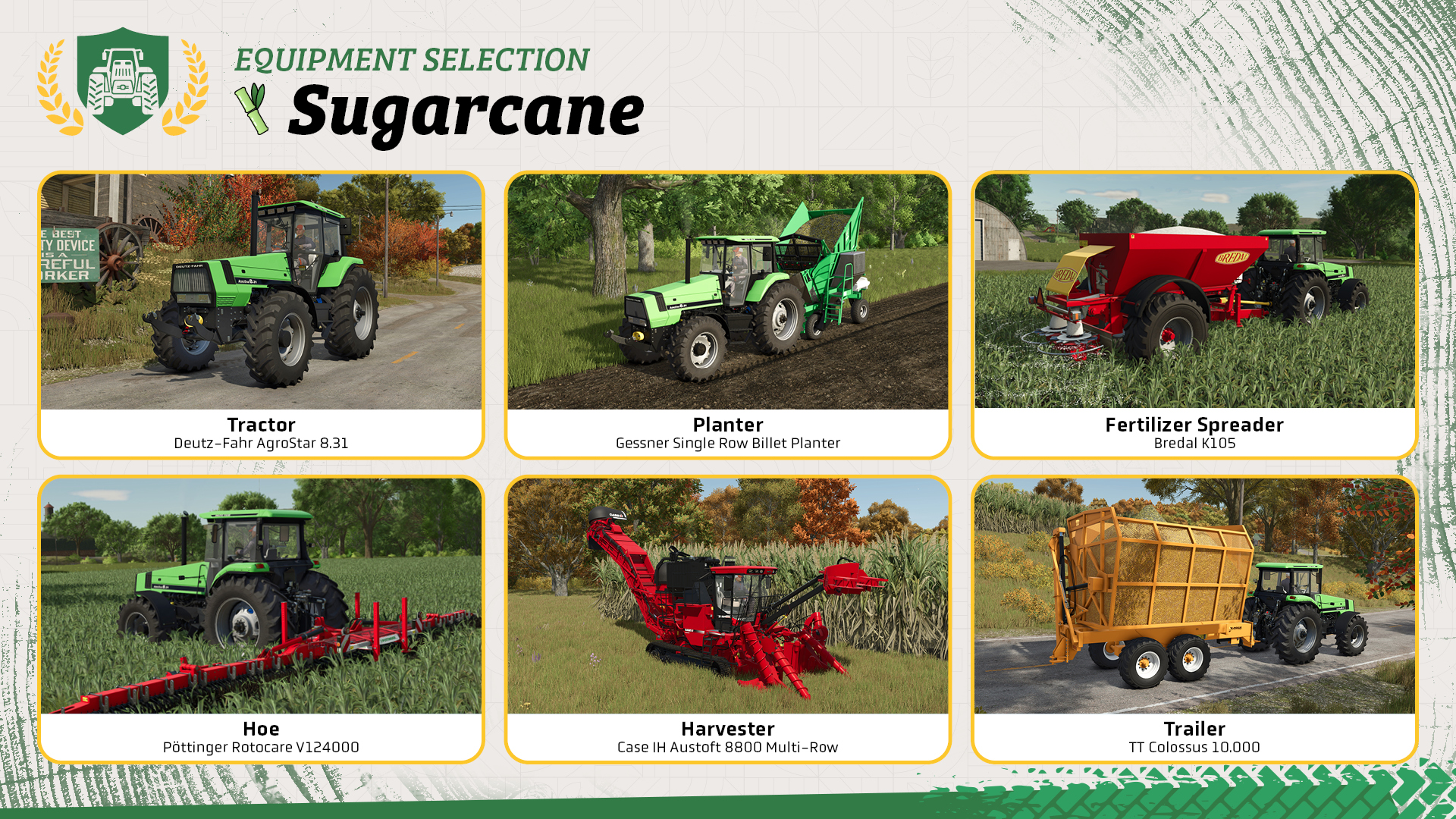
Sugarcane is a special case compared to many other crops. You usually don’t need to prepare the field before planting, but you should still check the field information to see whether lime or plowing is required.
- Tractor: You need a tractor for most of the work.
- Planter: Use a specialized planter and fill it with a sugarcane pallet from the shop. Later, you can also use harvested sugarcane as planting material.
- Fertilizer spreader: Fertilizing improves your yield. Solid fertilizer is a simple and beginner-friendly option. Some spreaders can also apply lime.
- Hoe: Remove weeds early so they do not reduce your yield.
- Sugarcane harvester: You need a special harvester for sugarcane.
- Trailer: Use a trailer to collect, transport, and sell the harvested sugarcane.
Let’s Get To Work!
Got everything ready? Then it’s time to head to the field. If seasonal growth is enabled, sugarcane can be planted from March to April and harvested from October to November.
Step 1: Liming the field
Check the field information first. If the field needs lime, fill your spreader with lime and apply it across the whole field. If lime is not required, you can skip this step.
Step 2: Planting sugarcane
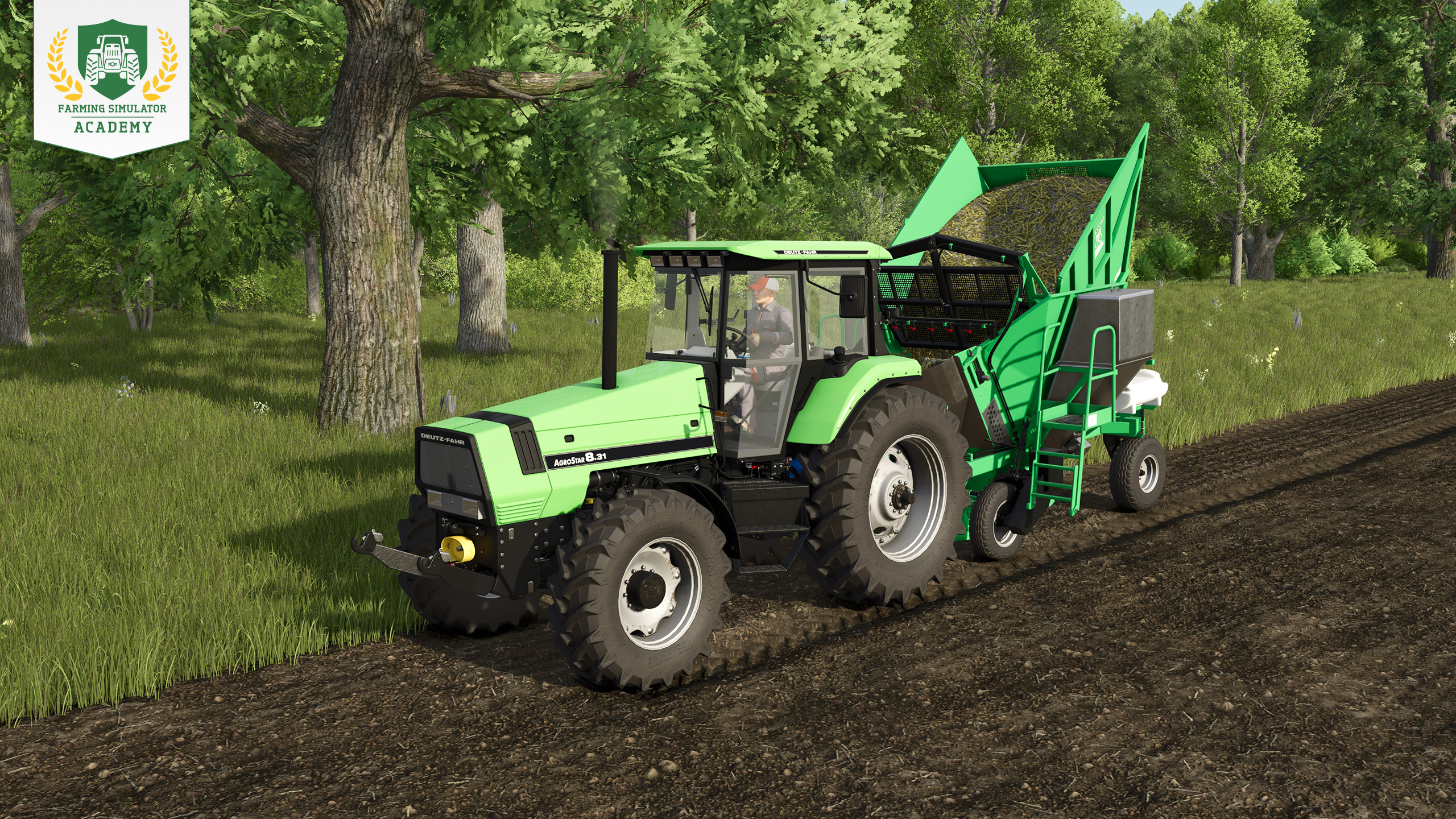
Attach the planter to your tractor and fill it from a sugarcane pallet. Then drive to the field, lower the planter, switch it on, and start planting.
Read more about seeding and planting basics here.
Step 3: Fertilizing the field
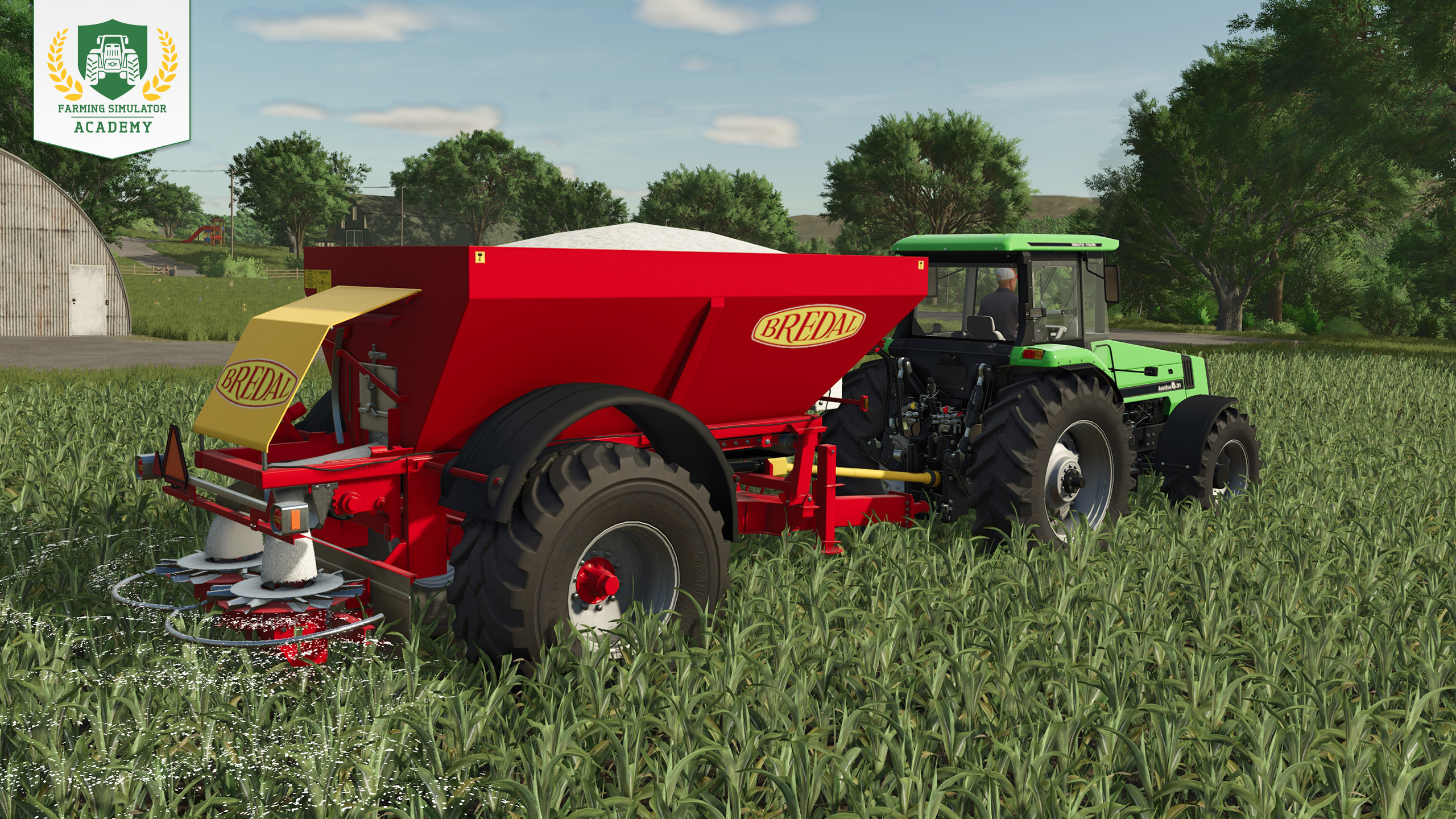
Apply fertilizer to improve the yield of your sugarcane. One application already helps, but two applications per crop cycle are better. To reach 100% fertilization, wait at least one growth stage between both passes.
This guide explains the different ways to fertilize your field.
Step 4: Removing weeds
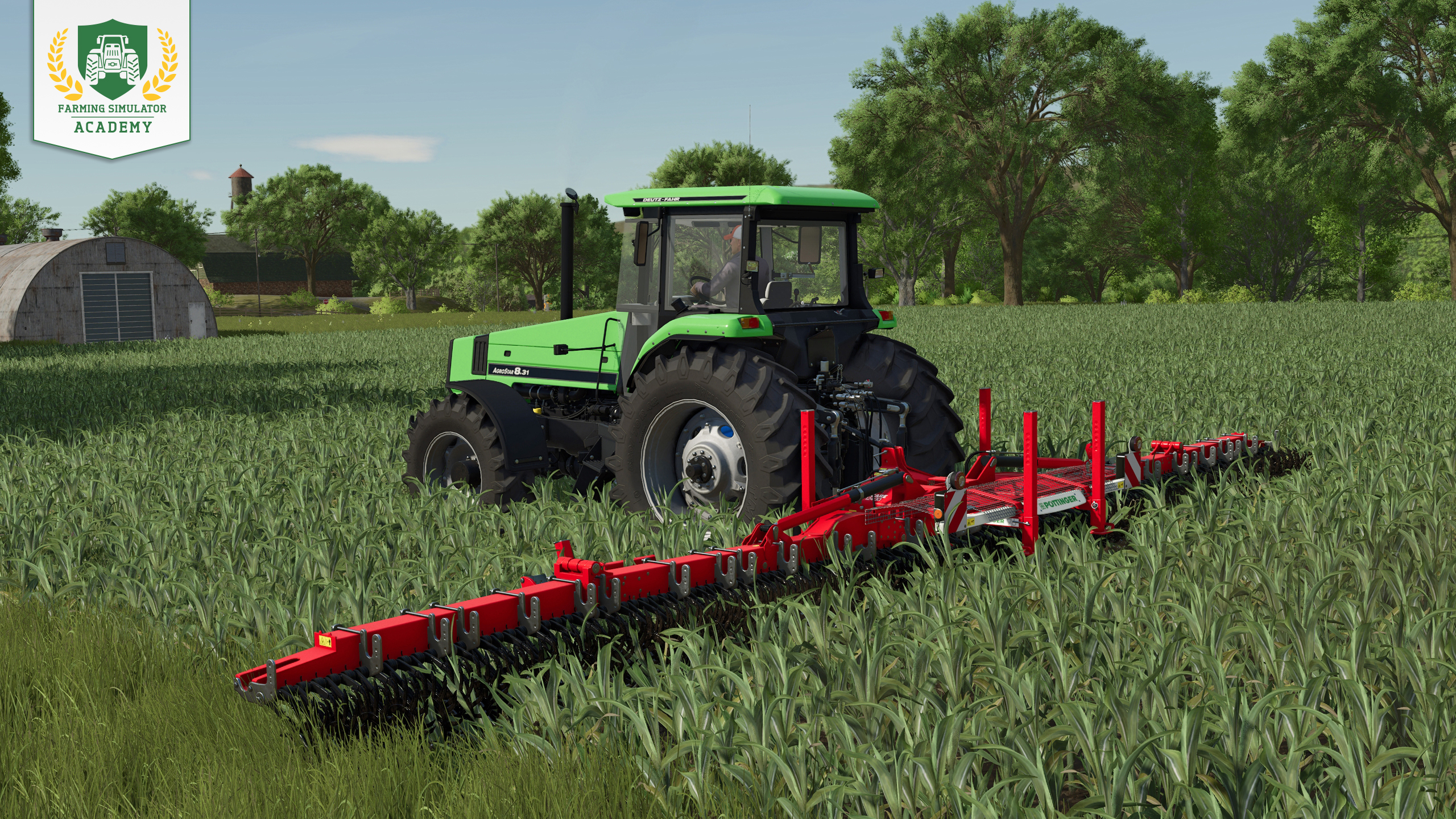
Weeds will appear soon after planting. Remove them early with a weeder, before they grow beyond the first stage. If you wait too long, you will need to spray herbicide instead. If crop destruction is enabled, use narrow tires to avoid damaging your plants.
Find out when a weeder is enough and when spraying becomes necessary.
Step 5: Harvesting sugarcane
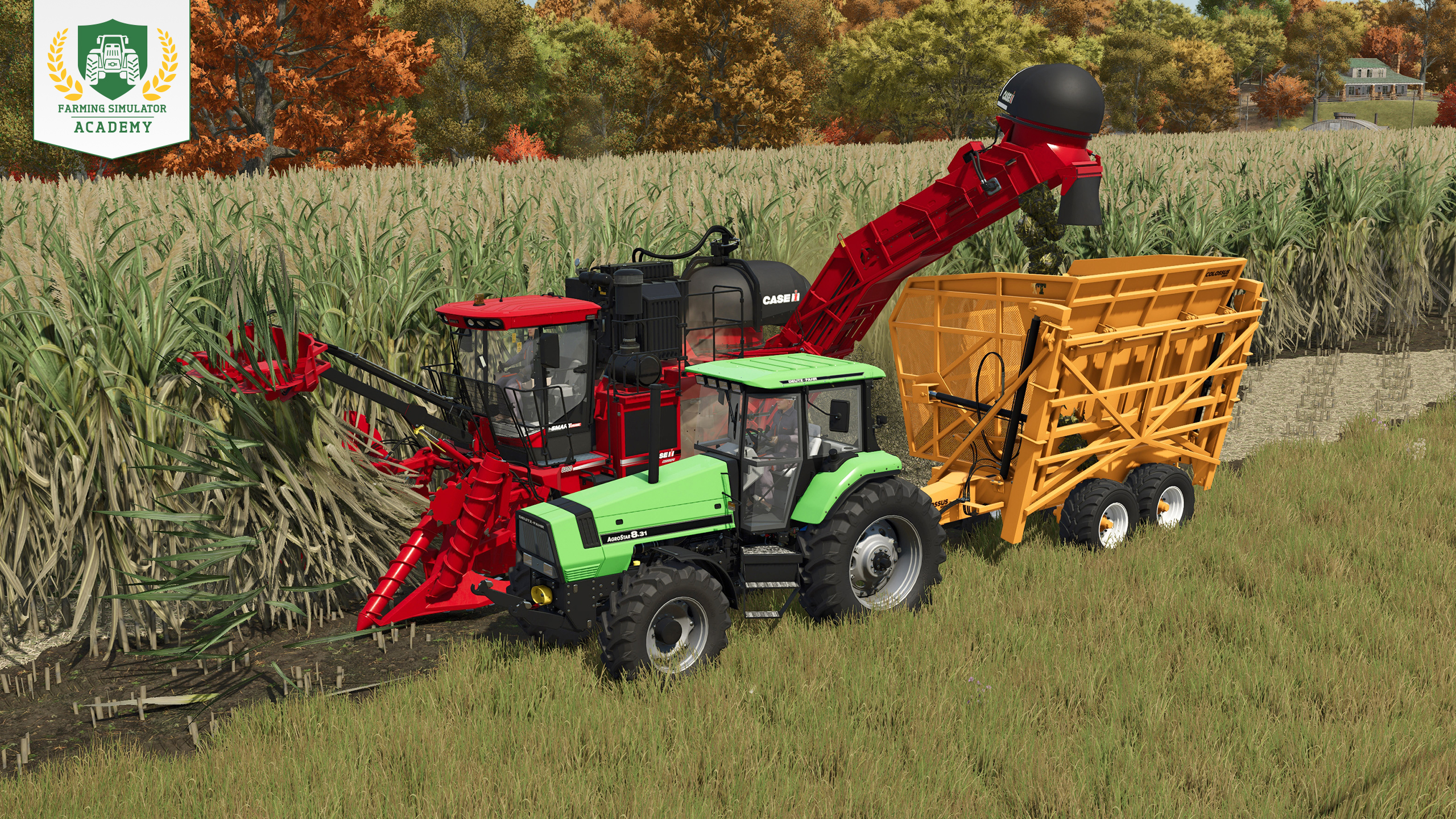
When the sugarcane is fully grown, take your harvester and trailer to the field. Because the harvester has a narrow working width, harvesting takes some time. Once the trailer is full, unload it and continue.
Step 6: Selling the sugarcane
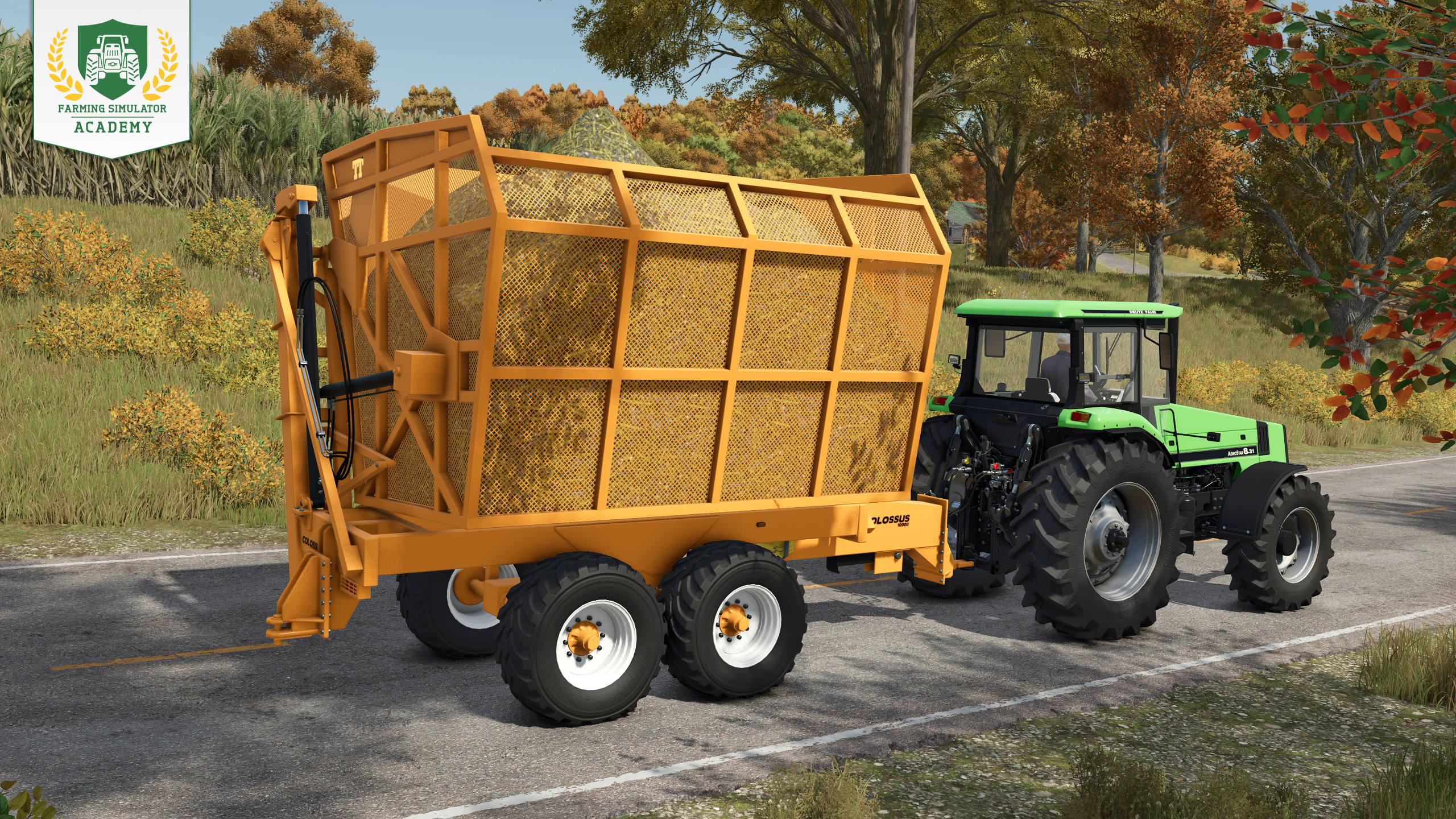
Check the prices screen for the best selling point, then take your trailer there and unload in the marked area. You can also deliver sugarcane to the sugar mill for processing. Keep in mind that sugarcane cannot be stored in a regular silo, so you either sell it, process it, keep it in a trailer, or unload it onto the ground for later use.
Step 7: Preparing for the next harvest
You do not have to plant sugarcane again after every harvest. Leave the plants on the field and wait for them to grow back. After the third harvest, plow the field to avoid a yield penalty. Plowing removes the existing sugarcane, so you need to start a new cycle.
Take a closer look at plowing and cultivating in this Academy lesson.
Processing Sugarcane: Products
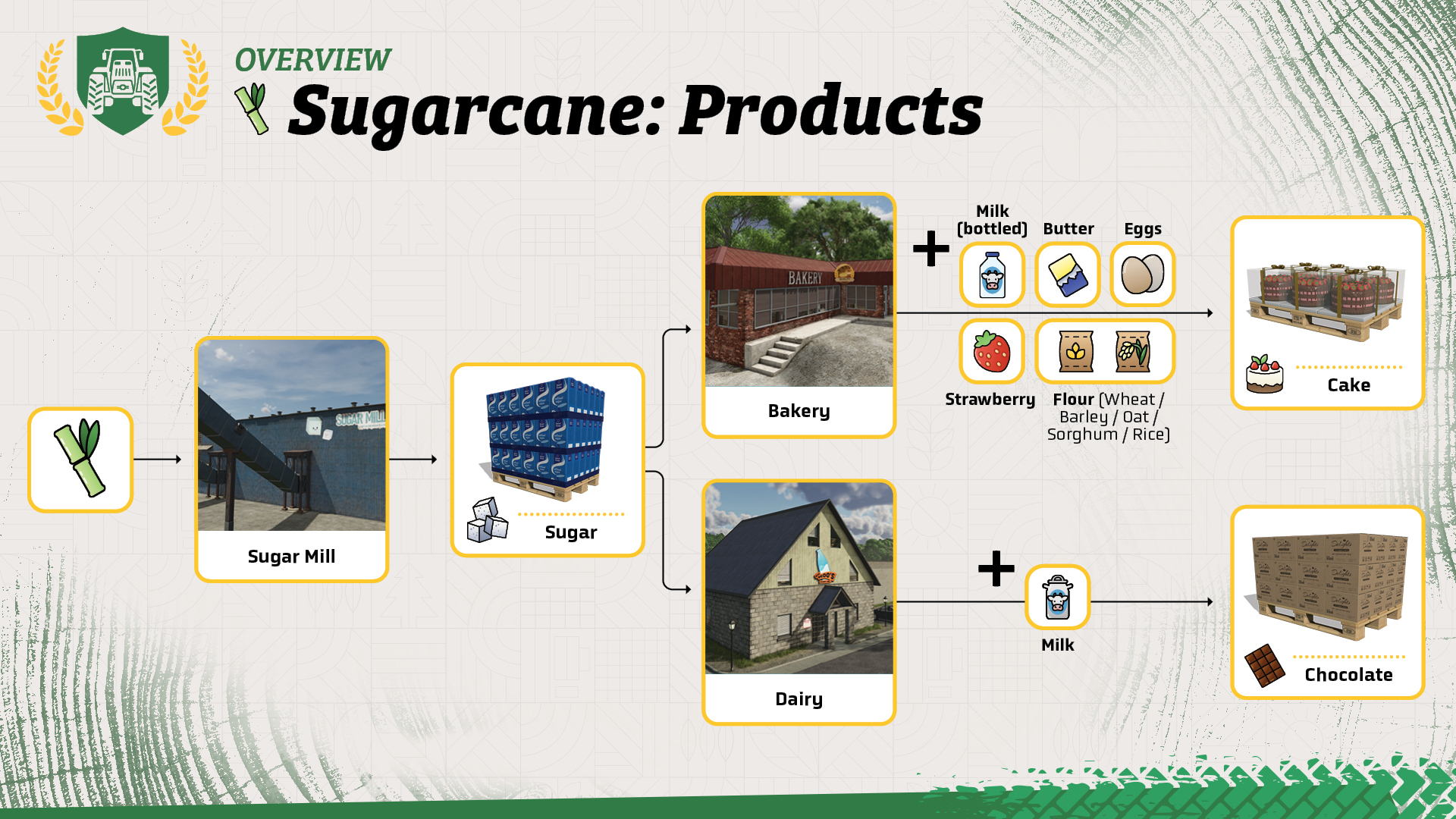
Sugarcane can be processed at the sugar mill. Sugar is a useful product for further production chains and often a better long-term option than selling raw sugarcane right away.
Well Done!
Congratulations! You now know the basics of sugarcane in Farming Simulator. When you’re ready, continue with the next Farming Simulator Academy lesson!


Pumps N' Hoses by @CreativeMesh is available NOW & FREE for Farming Simulator 25! Enjoy new content, 40+ items, manure separation, biogas & more. Also available: Patch 1.23 with bug fixes, improvements & some new additions for modding. 🛠️ https://t.co/G86wgFzbnb

Beans, Alpacas… and Brahman cattle! 🐄🌱 Meet another new animal coming with the Farming Simulator 25: Beans & Alpacas Expansion and learn what makes Brahmans special. 👉 Check out the full preview: https://t.co/b7DzQD6tSZ https://t.co/s19RzlKD0B

🇺🇸 Beans & Alpacas is coming to PAX West! Play the expansion for the first time in the US and meet Farmer Cop at our booth throughout the show! 🦙🌱 https://t.co/4o87swmX6o

🚜 Farming Simulator is at the Farm Progress Show! Visit us at the Fendt Experience Center, jump into the driver’s seat and try out your favorite Fendt in Farming Simulator! 🌾🎮 https://t.co/1oGOQFPpg0

Social Media


Pumps N' Hoses by @CreativeMesh is available NOW & FREE for Farming Simulator 25! Enjoy new content, 40+ items, manure separation, biogas & more. Also available: Patch 1.23 with bug fixes, improvements & some new additions for modding. 🛠️ https://t.co/G86wgFzbnb