-

-
 Argentina (en)
-
 Australia (en)
-
 Belgien (de)
-
Belgique (fr)
-
België (en)
-
 Brasil (en)
-
 Canada (en)
-
Canada (fr)
-
 Česko (en)
-
Chile (en)
-
 Danmark (en)
-
 Deutschland (de)
-
 España (en)
-
 France (fr)
-
 Hrvatska (en)
-
 Ireland (en)
-
 Italia (en)
-
 Magyarország (en)
-
 Nederland (en)
-
 Norge (en)
-
 Österreich (de)
-
 Polska (pl)
-
 Portugal (en)
-
 România (en)
-
 Schweiz (de)
-
 Slovenija (en)
-
 Slovensko (en)
-
 South Africa (en)
-
 Srbija (en)
-
Suisse (fr)
-
 Suomi (en)
-
 Sverige (en)
-
Svizzera (en)
-
 United Kingdom (en)
-
 United States (en)
-
 Россия (en)
-
 Україна (en)
-
 日本 (en)
-

[Crops 101] How To Sow & Harvest Sorghum
![[Crops 101] How To Sow & Harvest Sorghum](/cms/uploads/news_6a9ed8f587ad9.jpg)
Welcome to your next “Crops 101” lesson of the Farming Simulator Academy! In this tutorial, we show you how to plant, care for, harvest, and use sorghum.
What Is Special About Sorghum?
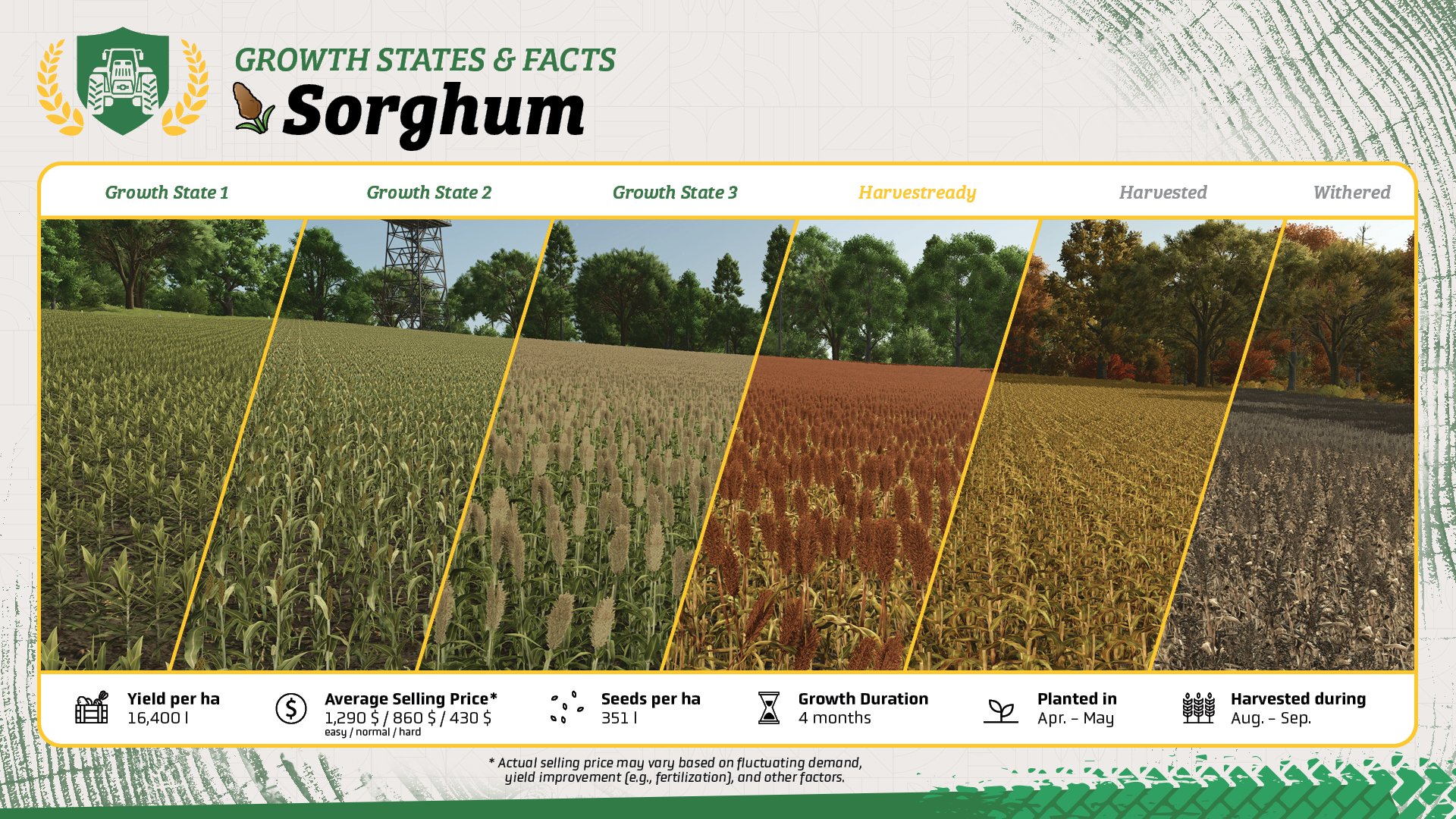
- Sorghum is planted with a planter, unlike most other grain crops, which use a seeder, but still needs the same combine harvester.
- Compared to other grains its growth duration is very short: only four months.
- You can use sorghum as feed for pigs, horses, and chickens.
What You Need For Sorghum
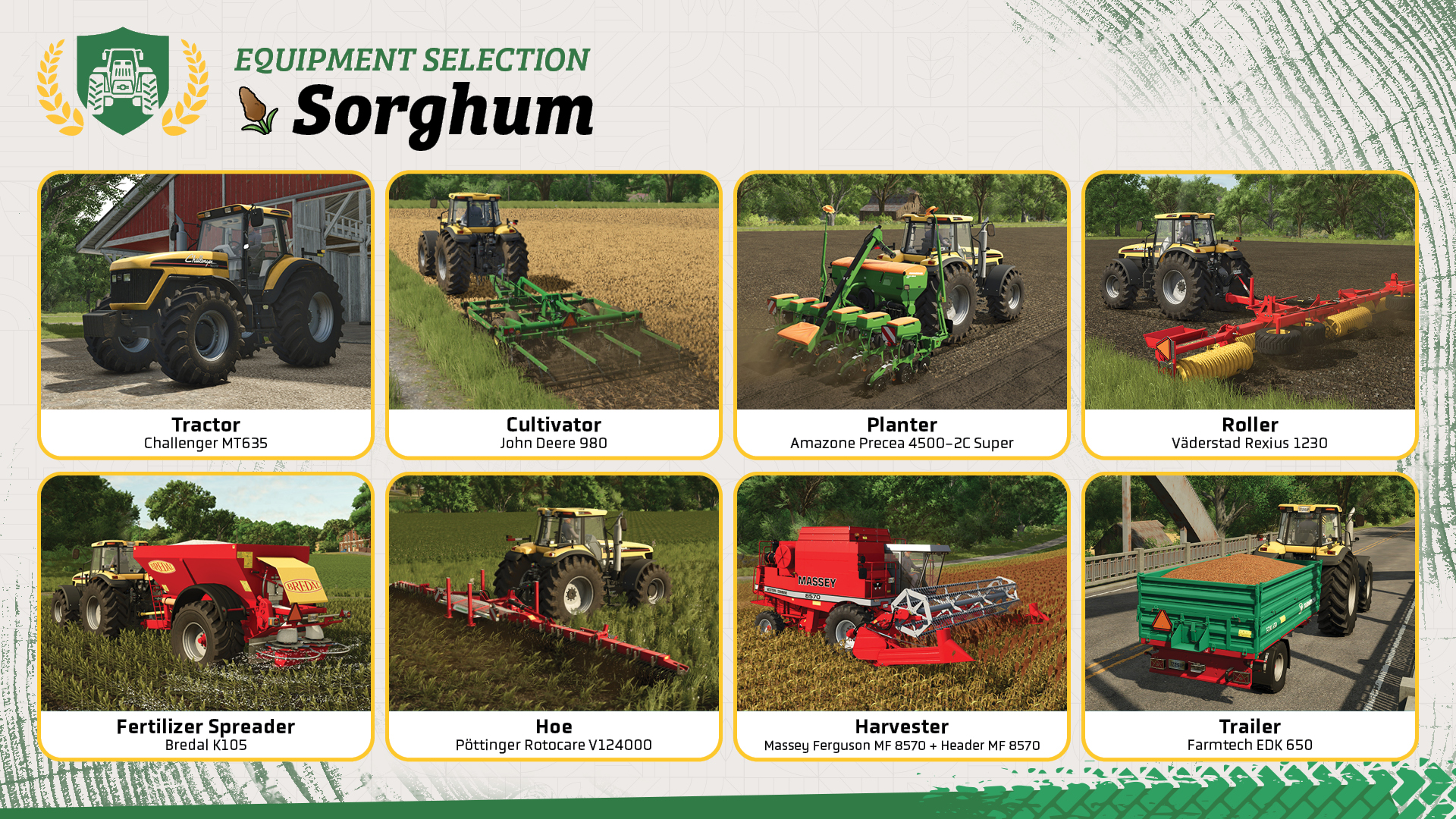
Sorghum uses mostly standard field equipment. The main difference compared with crops such as wheat or barley is that you need a planter instead of a seeder.
- Tractor: Operates the tools used for field preparation, planting, and crop care.
- Cultivator: Prepares the soil before planting. Use a plow instead if the field information says plowing is required.
- Planter: Plants sorghum and needs to be filled with seeds.
- Roller: Optional after planting for a small additional yield bonus.
- Fertilizer spreader: Applies solid fertilizer and, depending on the model, lime.
- Hoe: Removes weeds before they can reduce your yield.
- Harvester with a grain header: Harvests ripe sorghum.
- Trailer: Transports your harvest to storage, a selling point, or production.
Let's Get To Work!
With seasonal growth enabled, plant sorghum in April or May. Your crop will be ready to harvest in August or September.
Step 1: Applying lime
Start by checking the field information. If the field needs lime, fill a compatible fertilizer spreader and cover the entire field. Lime is not required every time, so simply skip this step when the field does not need it.
Step 2: Cultivating the field
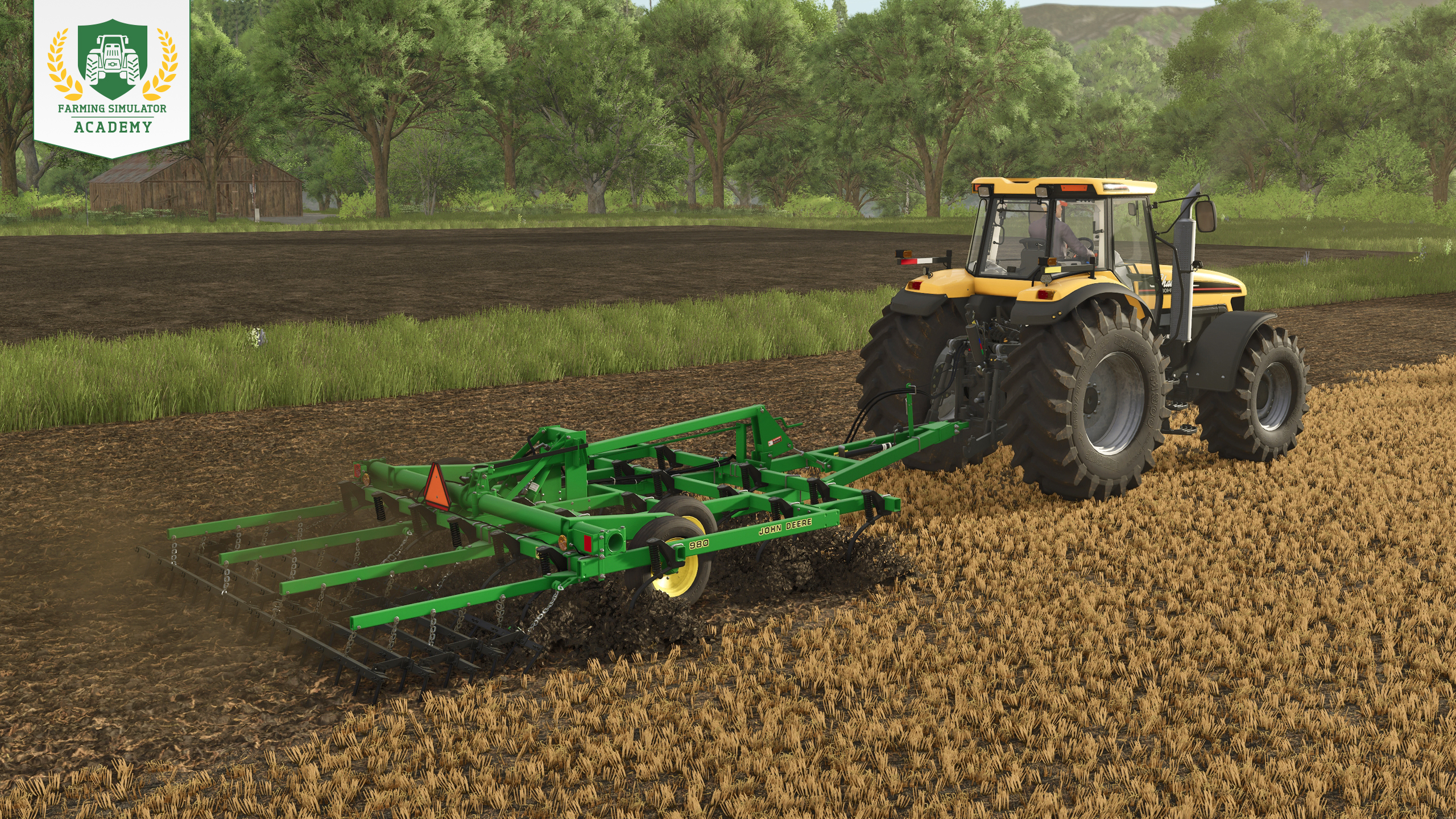
Prepare the soil with your cultivator before planting. Check the field information first: if plowing is required, switch to a plow instead and work the entire field with it.
Not sure which tool your field needs? See our field preparation guide.
Step 3: Planting sorghum
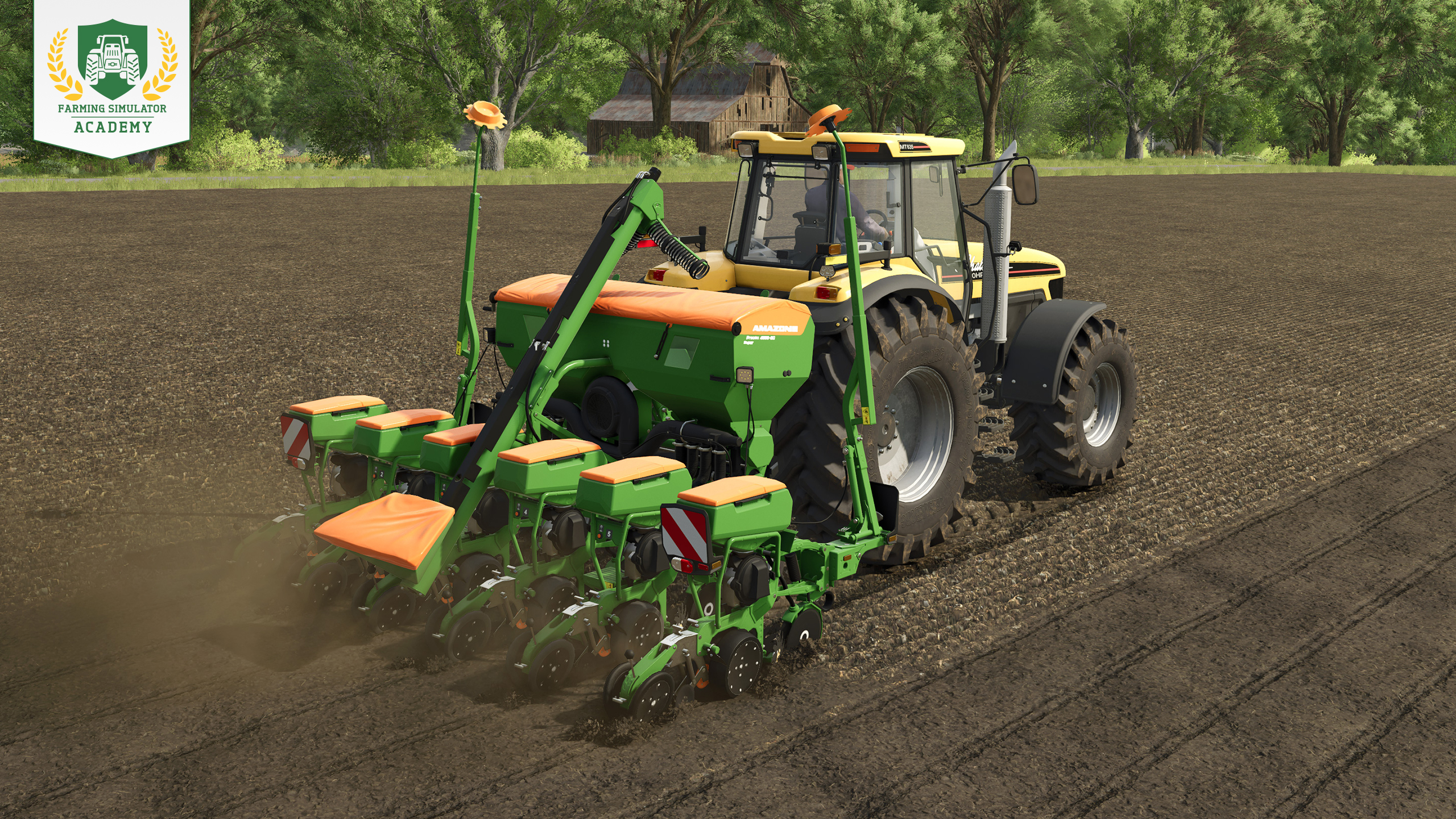
Fill your planter with seeds and select sorghum as the crop. Lower and activate the planter, then work across the field until the entire area is planted.
Need help with planters? Our sowing and planting guide has the basics.
Step 4: Rolling the field
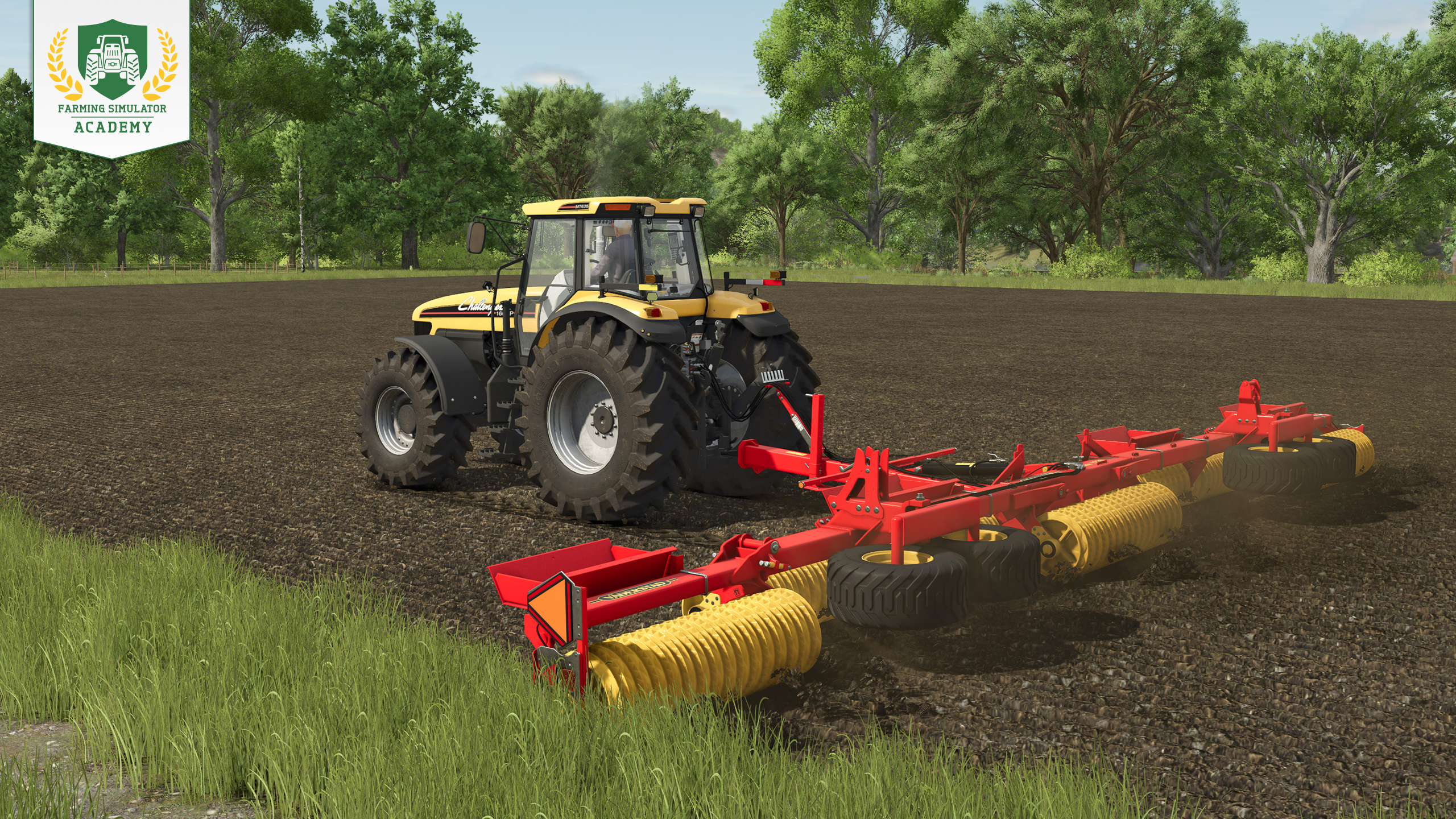
Rolling is optional, but it gives you a small additional yield bonus. Simply lower the roller and cover the freshly planted field once. If you want to save time or do not own a roller yet, you can also skip this step.
Going for the extra bonus? Here's how rolling works.
Step 5: Fertilizing
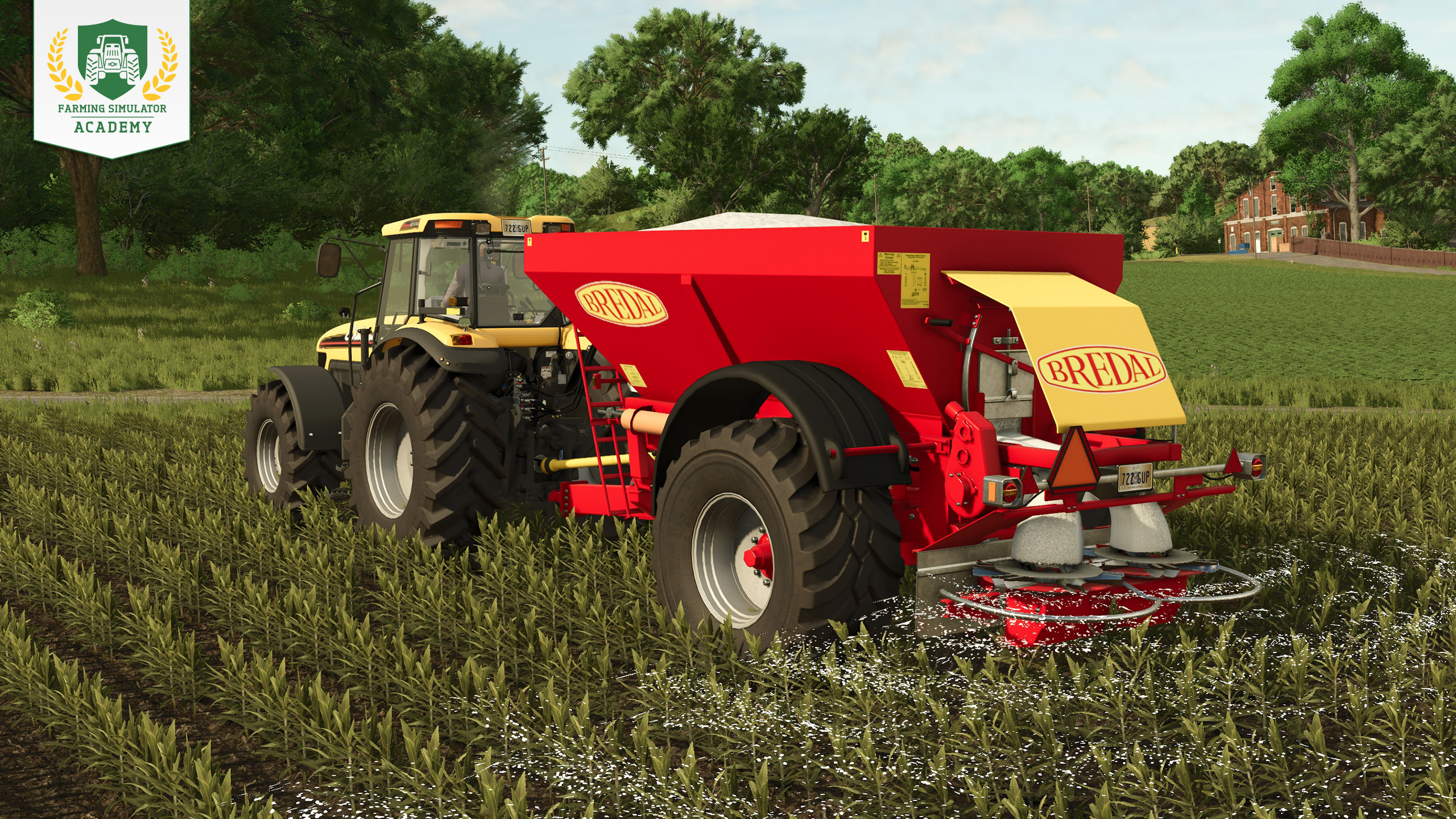
Fertilize your sorghum to increase the final yield. You can fertilize twice during one crop cycle, but there needs to be a growth stage between both applications. If you previously used the same spreader for lime, remember to unload it before filling it with fertilizer.
Tip! If you use manure or slurry, you can activate the double application rate to reach full fertilization with one application.
Want the full rundown? Read our fertilizing guide.
Step 6: Removing weeds
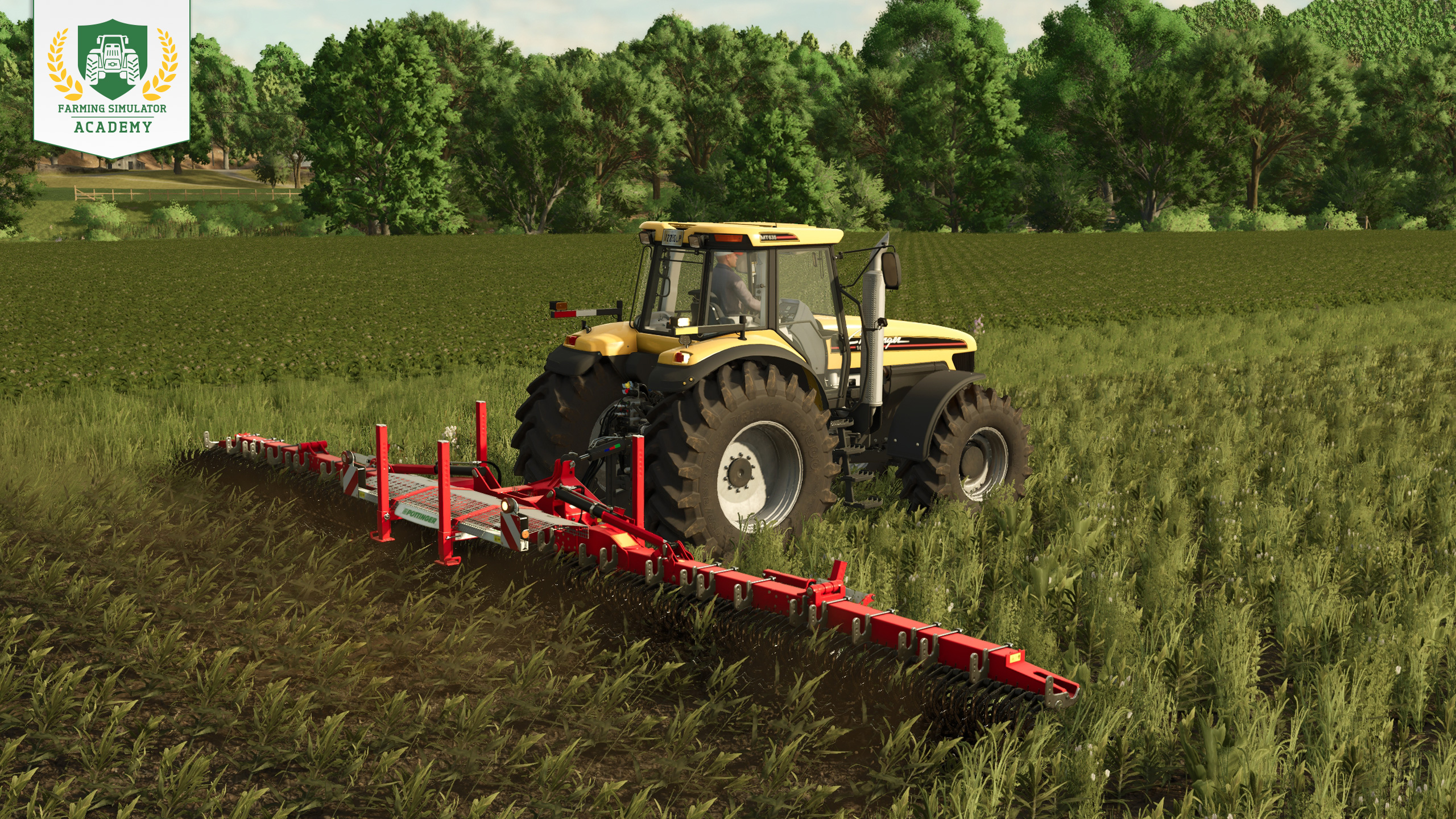
Keep an eye on the field while your sorghum grows. Remove weeds while they are still young, as your available options become more limited once they get larger. A hoe can deal with young and medium weeds, while fully grown weeds require herbicide.
Tip! If crop destruction is enabled, use narrow tires when driving through growing sorghum to avoid damaging your plants.
Weeds giving you trouble? Here's how to deal with them.
Step 7: Harvesting sorghum
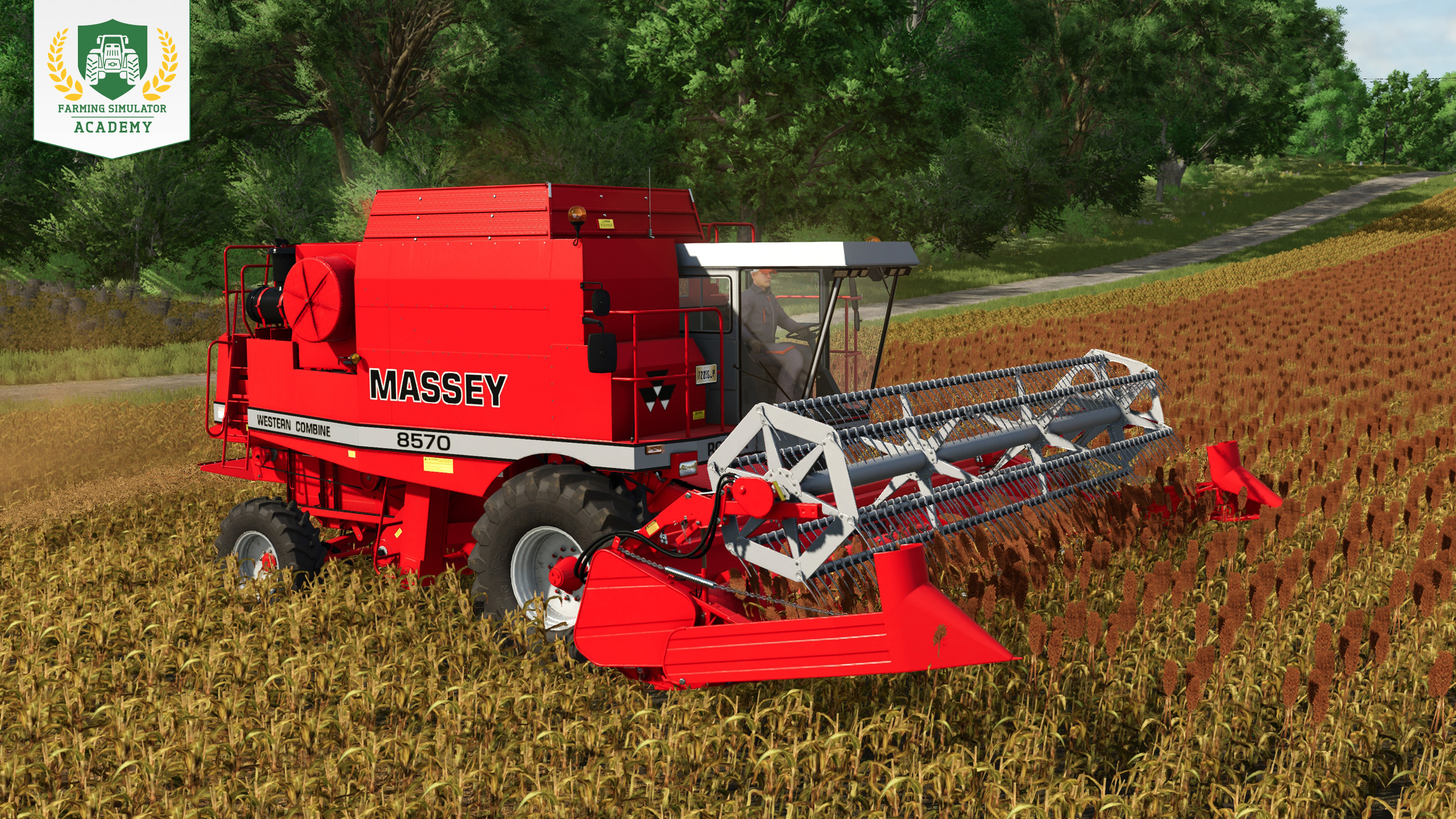
Once the sorghum is ripe, attach a grain header to your combine harvester. Lower and activate the header and harvest the field row by row. When the grain tank fills up, unload the sorghum into your trailer and continue harvesting.
Tip! A header trailer is optional, but it makes transporting a wide grain header on narrow roads much easier.
Step 8: Selling and using sorghum
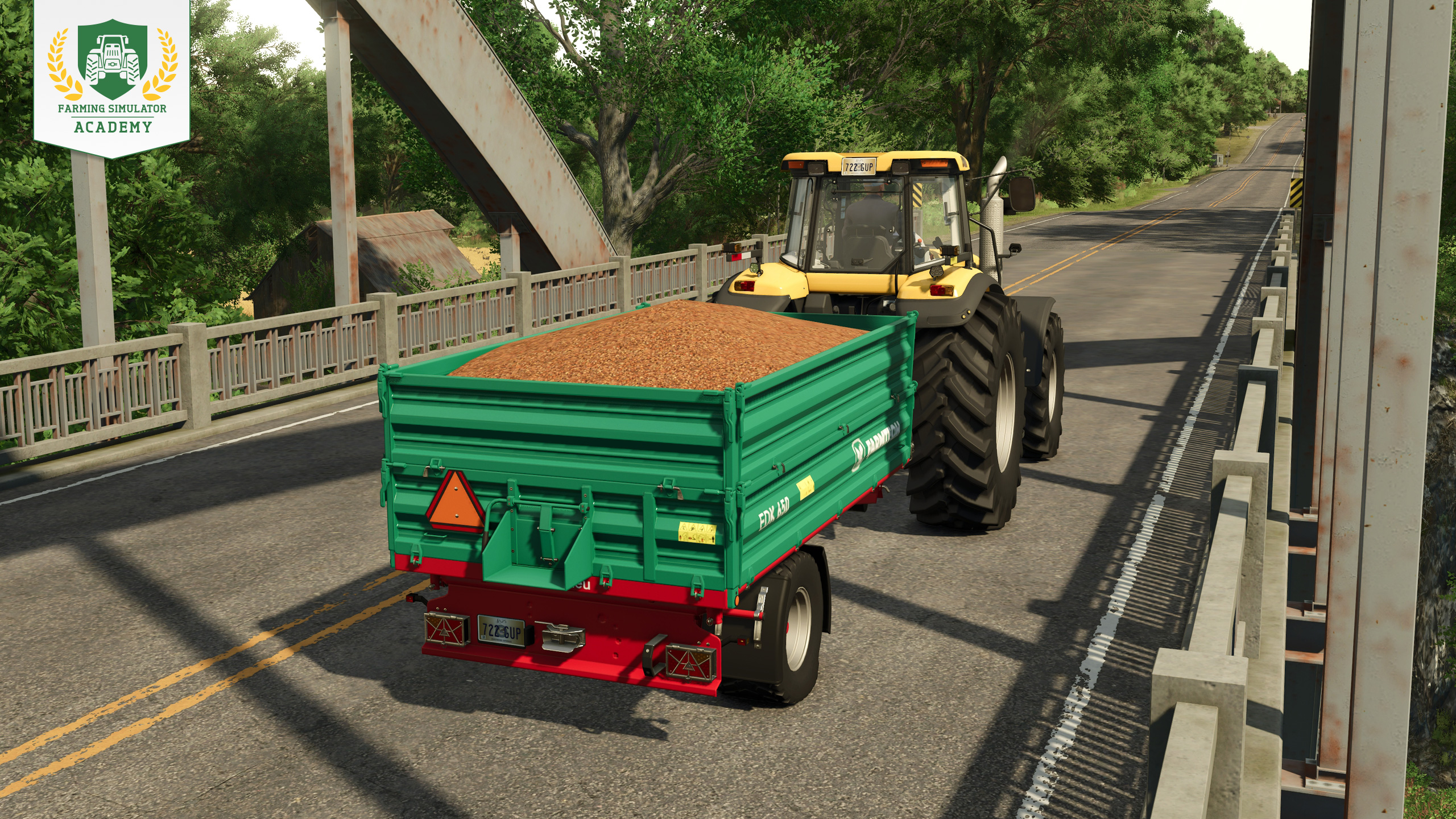
Load the harvested sorghum into your trailer and decide what you want to do with it. You can sell it directly, store it in a suitable silo, use it as animal feed, or deliver it to a grain mill for processing. Check the prices screen if you want to find the most profitable selling point.
Processing Sorghum: Products
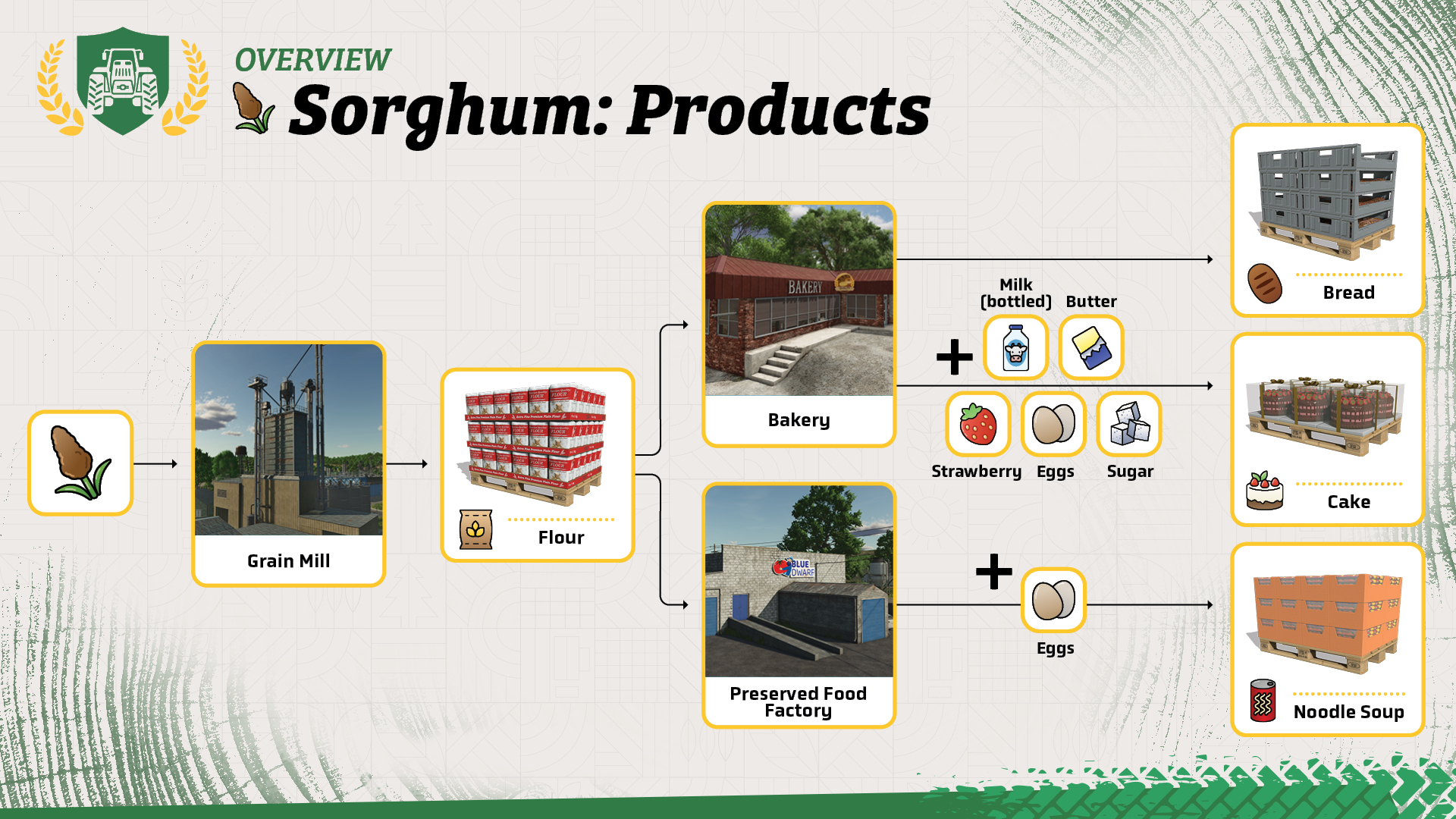
Deliver sorghum to a grain mill to turn it into flour. You can then transport the flour to a bakery or preserved food factory, where it is used for further production. The overview above shows the available production route and the additional ingredients required for the different products.
Well Done!
Congratulations! You now know the basics of growing sorghum in Farming Simulator. When you're ready, continue with the next Farming Simulator Academy lesson!


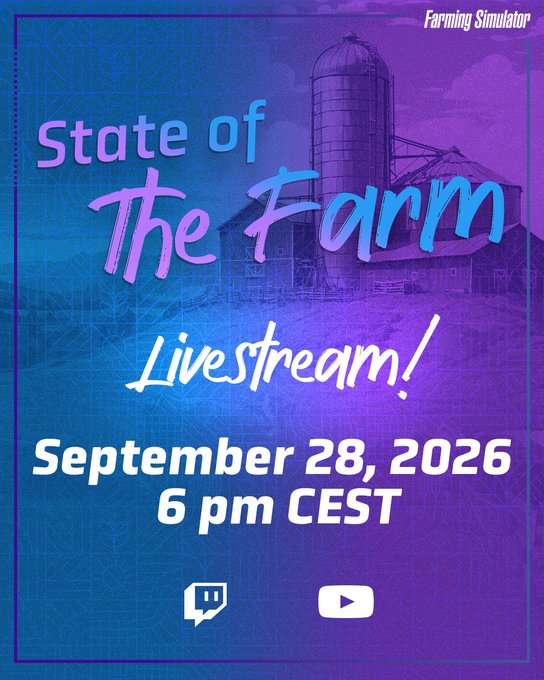
📢 Ready for the next State of the Farm? Tune in on September 28 at 6 PM CEST for our livestream with fresh Farming Simulator updates, insights & more. 🌾 See you live! 👋 🔗 https://t.co/G8UNIIfies 🔗 https://t.co/7ZITH3jrh2 https://t.co/dCXw2lUP2M
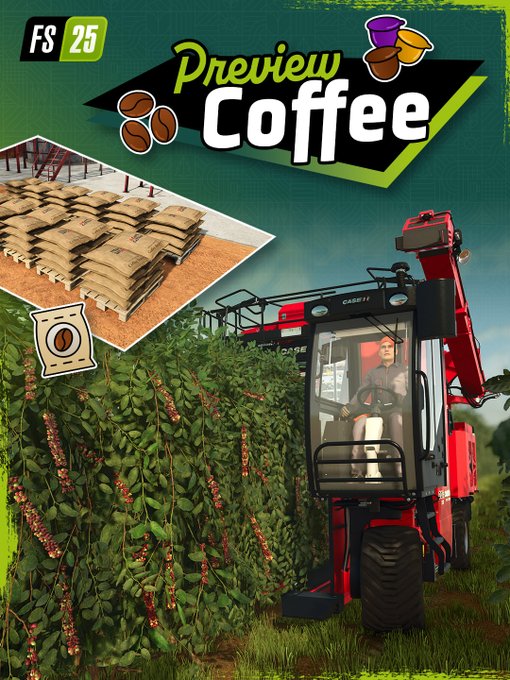
Something’s brewing on Catuaí. ☕ Plant, harvest and process your own coffee in FS25: Beans & Alpacas. From hillside plantations to tiramisu, discover a whole new way to grow! Check our blog for more info! 👇 🔗 https://t.co/WuO23yxwHO https://t.co/Vcr2kUwhxb
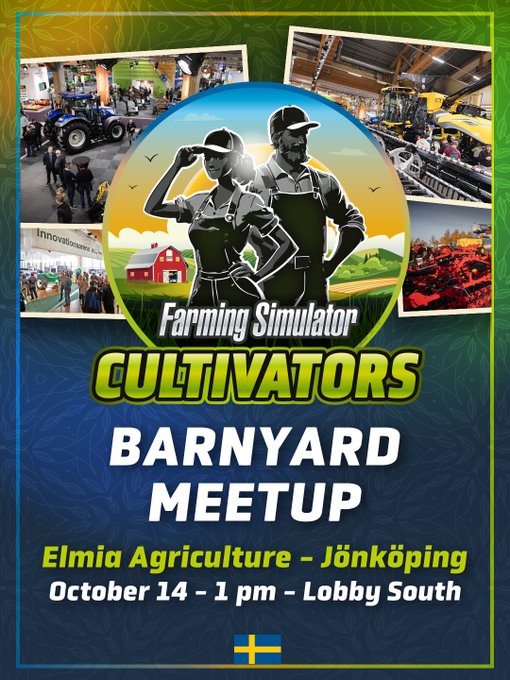
🇸🇪 Barnyard MeetUp – Sweden is coming to Elmia Agriculture! Meet the Farming Simulator community, play FS25 and grab the exclusive Barnyard MeetUp Coin – Season 1. 🚜 🎟️ A valid Elmia Agriculture ticket is required: https://t.co/R9DUpQjZgX https://t.co/XOX5pP6Qe0
☕ Coffee, construction & a dinosaur? Build new production chains, help transform Catuaí and uncover dinosaur bones in Farming Simulator 25: Beans & Alpacas! 🦖 Check our blog for more infos! 👇 🔗 https://t.co/ECshBYcKB5 https://t.co/VPkPxsLviS

Social Media


📢 Ready for the next State of the Farm? Tune in on September 28 at 6 PM CEST for our livestream with fresh Farming Simulator updates, insights & more. 🌾 See you live! 👋 🔗 https://t.co/G8UNIIfies 🔗 https://t.co/7ZITH3jrh2 https://t.co/dCXw2lUP2M